Quand faut-il renégocier son hypothèque ?
Si vous avez souscrit un prêt hypothécaire, il est ju...
November 30, 2022



thumbnail
Planned URL: https://hypothequerapide.com/en/notre-blogue/2026/08/29/financing-heritage-renovation-montreal
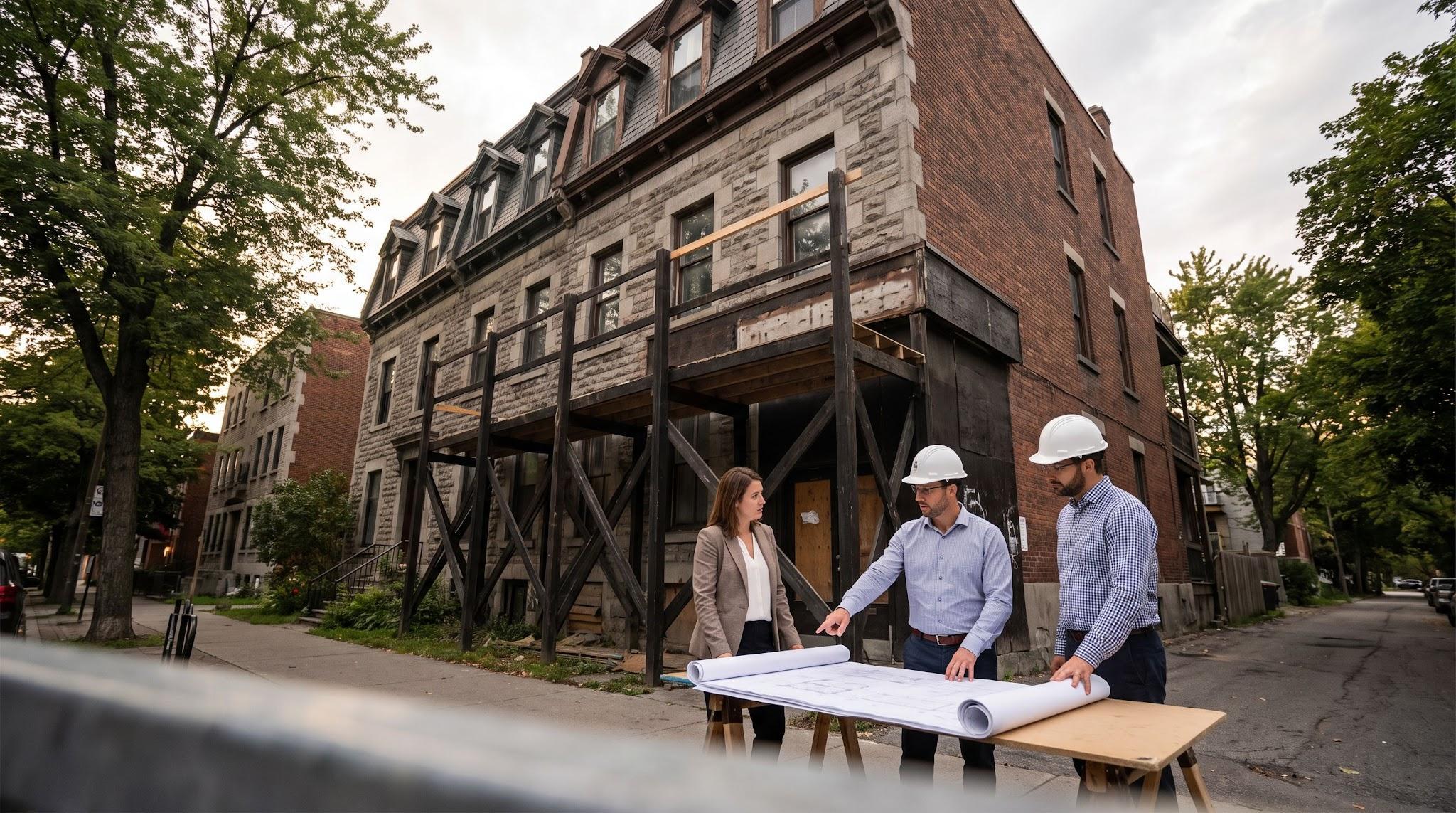
Montreal heritage grants cover up to 50% of eligible costs for buildings in historic sectors, but the city imposes a strict condition: you cannot start work before receiving official approval. This creates a significant financial gap, as owners must prove they can fund the entire project upfront through personal savings, lines of credit, or mortgage refinancing.
We will examine how to secure bridge financing and prepare the mandatory documentation to ensure your restoration project remains eligible for municipal subsidies.
Montreal heritage grants cover up to 50% of eligible costs for buildings in historic sectors like Old Montreal or Shaughnessy Village. Subsidies target restoration of original features, requiring strict compliance with the Cultural Heritage Act. The last sentence must link property status to the specific eligibility zones managed by the city.
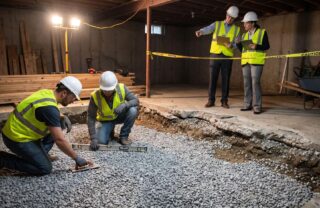
Before diving into the paperwork, you need to understand that Financing Heritage Renovations in Montreal Before Receiving the Grant requires a solid financial plan, as work must never start before you get the green light.
The Cultural Heritage Act dictates your path. Identify if your building is a recognized historic site or a designated theatre. Check Montreal's urban plan for specific designations.
Verify geographical boundaries immediately. Use municipal subsidy zones to confirm eligibility. Location dictates the specific grant percentage available, so don't guess; verify the map first.
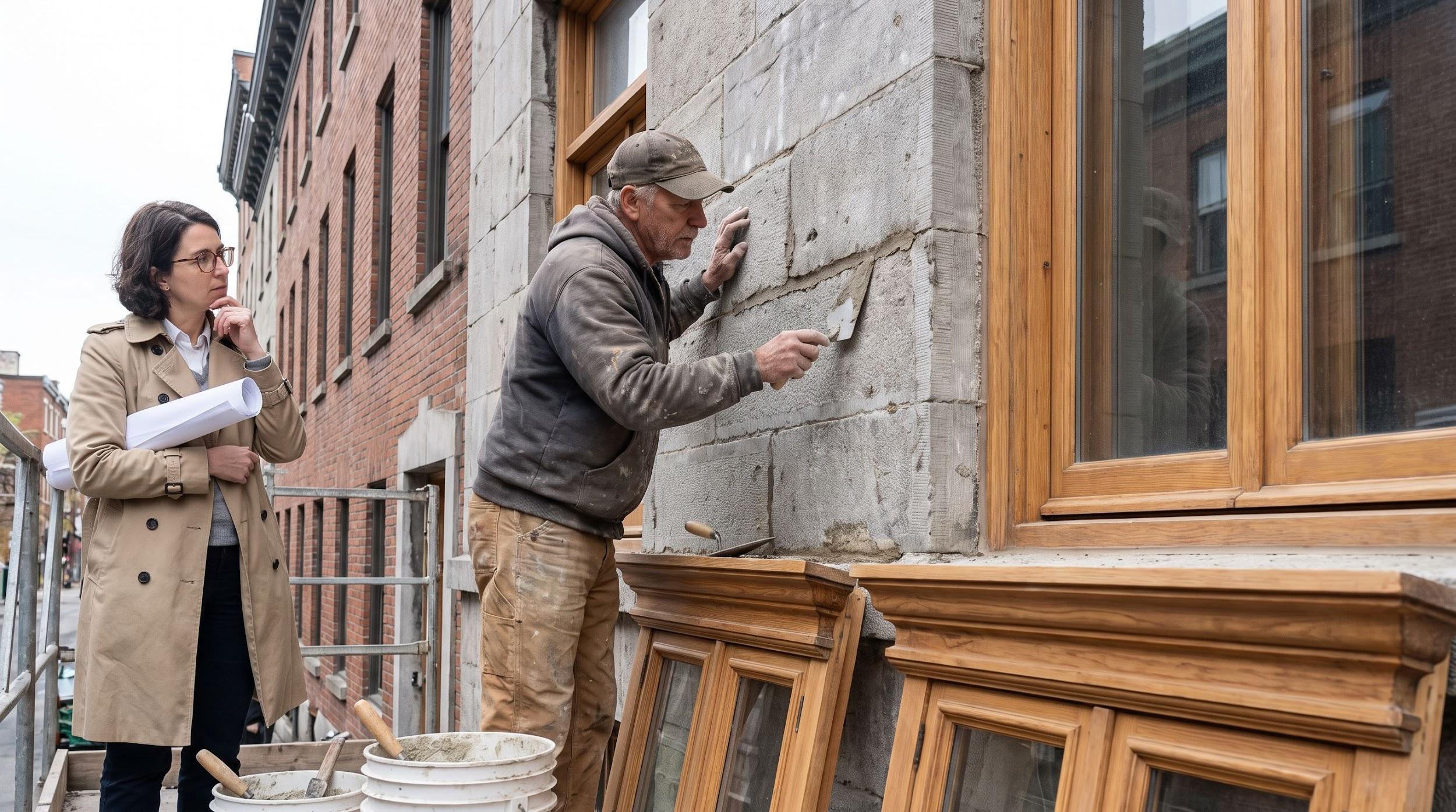
Restoration preserves original architectural character. This includes masonry, wood windows, and cornices. Use authentic materials to maintain heritage value. Renovation focuses on durability and modern building compliance. Contrast these two approaches clearly for the grant application.
Restoration vs. Renovation
Restoration: Preserving original architectural character (masonry, wood windows, cornices) using authentic materials. Renovation: Focusing on durability and modern building compliance.
Eligible work types focus on the building envelope and structural integrity. Emphasize that purely cosmetic interior changes rarely qualify for these funds.
Restoration aims to revive the past, while renovation ensures the building survives the future; the grant office prioritizes the former.
Paperwork is the backbone of your request, so getting the technical details right from the start is non-negotiable.
Contractors must hold a valid RBQ license. Their quotes need extreme precision. Vague estimates lead to immediate delays or rejection.
Plans and specifications must accompany every bid. This proves the contractor understands heritage standards. Detail the scope clearly.
Include architect and engineer fees in your budget. These professional costs are often eligible for subsidies. Don't forget the municipal permit application fees.
Note the 15 percent cap on preparatory expenses. This limit applies to studies and plans. Calculate this carefully.
Professional fees are not just overhead; they are the blueprint for a compliant heritage project that the city is willing to fund.
Buildings vacant for over four years face stricter criteria. You must prove a viable revitalization plan. Heritage designations add another layer of oversight.
Urban plan designations dictate specific document needs. Photos of existing conditions are mandatory. Provide historical context for the site.
|
Property Type |
Key Document |
Extra Requirement |
|
Standard Heritage |
Photos |
Detailed Specs |
|
Vacant > 4 years |
Revitalization Plan |
Proof of Maintenance |
|
Classified Historic Site |
Ministry Approval |
Expert Supervision |
|
Urban Plan Area |
Zoning Permit |
Architectural Integration |
Financing Heritage Renovations in Montreal Before Receiving the Grant requires proving your financial capacity upfront. Plan your liquid assets before the first hammer hits.
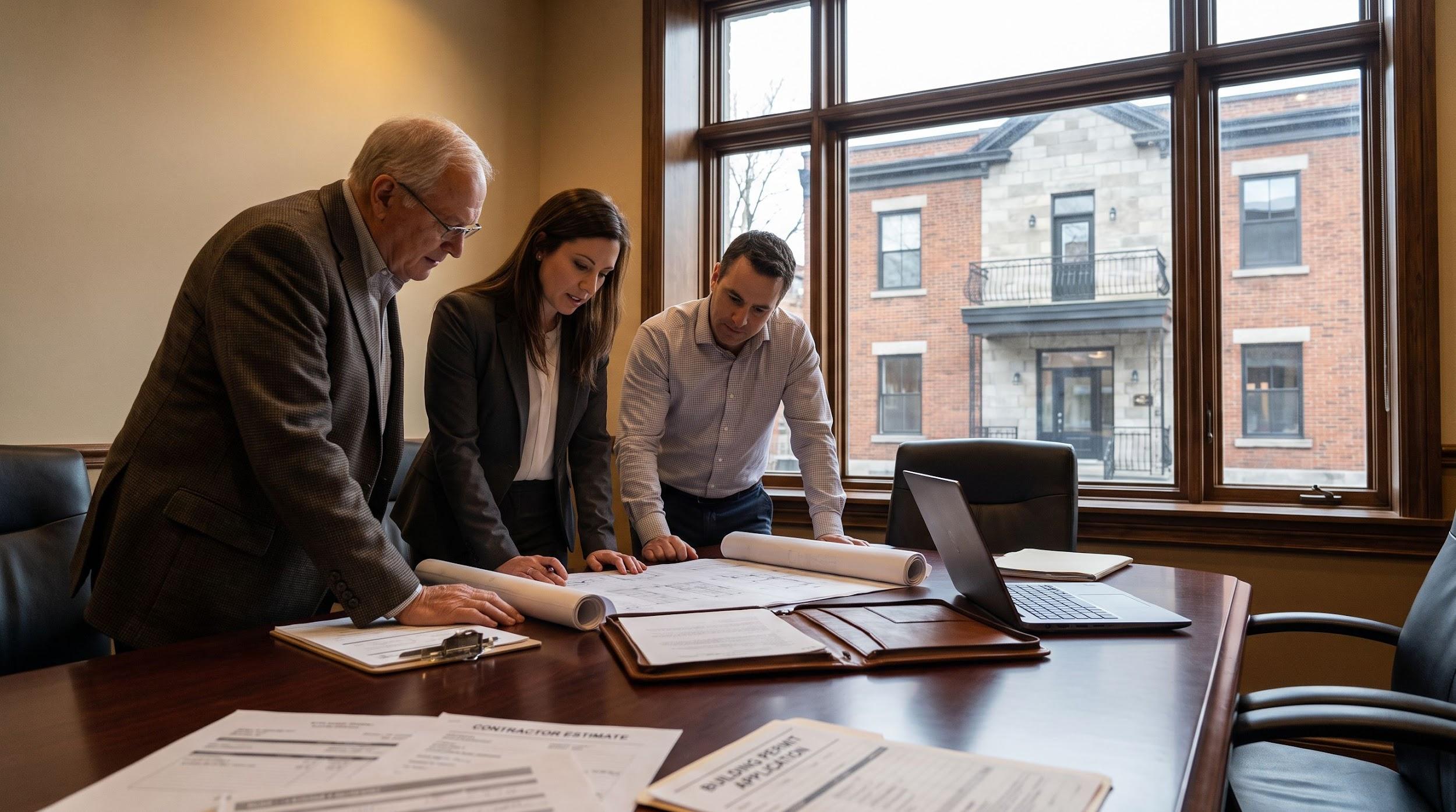
Showing you have the cash to finish what you start is just as important as the architectural plans.
Evaluate personal savings or lines of credit first. These cover initial costs before the grant arrives. Liquidity is your best friend here.
Mortgage refinancing is a powerful tool. It covers the total work amount upfront. Plan for the inevitable delay in receiving the final check.
Bridge financing helps bridge the gap. Talk to your lender about heritage-specific loans. Keep interest costs in mind.
Secure your funding early. Don't wait for the city's green light.
Obtain a formal letter from your financial institution. This document must confirm available funds for the entire project. Bank statements serve as additional validation of your financial health.
Pro Tip
Acceptable proof includes a formal letter from a financial institution or bank statements dated within the last 30 days.
Proof must cover the full cost. The subsidy only kicks in after completion. Ensure your statements are dated within thirty days.
The city won't gamble on your project; they need ironclad proof that you can pay the bills before they commit a single dollar.
Financing Heritage Renovations in Montreal Before Receiving the Grant requires this upfront proof to avoid immediate rejection of your file.
Even with perfect financing, a few simple slip-ups can kill your application instantly.
Warning
Never start physical construction or demolition before receiving written authorization from the city. Early commencement results in immediate and irreversible grant rejection.
Never start physical work before written authorization. Early commencement leads to immediate rejection. This is the most common pitfall for owners.
Preparatory studies are allowed. Construction is not. Keep your hammers down until the letter arrives.
Patience saves your subsidy. Wait for the official stamp.
You can combine Montreal grants with provincial programs. However, managing conflicting timelines is difficult. Avoid double-dipping on the exact same expense items.
Each government body has unique rules. Check both sets of requirements. Align your deadlines to maximize funding.
Coordinate with experts. Professional help prevents costly overlaps.
Obtain all permits before submission. Select contractors familiar with heritage standards. This avoids technical errors that trigger application denials later.
Review the processing timeline carefully. Set realistic milestones for your project.
Secure your Montreal heritage grant by finalizing technical plans and proving financial capacity before starting any work. Use bridge financing or personal funds to cover initial costs, ensuring all professional fees remain within the 15% limit. Act now to preserve your building’s legacy and unlock vital municipal funding.
No, you must wait for written authorization. A fundamental rule of Montreal’s heritage programs is that physical work cannot begin before you receive official approval. Starting construction early will lead to the immediate rejection of your application, though you are permitted to engage in preparatory studies and professional consultations beforehand.
The city requires ironclad proof that you can cover the total cost of the project upfront. You can validate your financial health by providing a formal letter from your financial institution or recent bank statements showing sufficient liquidity. These documents must typically be dated within thirty days of your submission to ensure the data is current.
Since subsidies are only disbursed after the work is completed, owners often bridge the gap using personal savings, lines of credit, or mortgage refinancing. You may also explore bridge financing or specific heritage-related loans with your lender. It is essential to plan for the delay between paying your contractors and receiving the final municipal reimbursement.
Yes, expenses for architects, engineers, and other experts are generally eligible, along with municipal permit fees. These preparatory expenses are typically capped at 15 percent of the total eligible work costs. While these fees can be incurred before final approval, their reimbursement depends entirely on the eventual success of your grant application.
Every contractor hired for the project must hold a valid RBQ license. Furthermore, their quotes must be extremely detailed, providing a breakdown of materials and labor costs per task. Vague estimates are a common pitfall that can lead to delays or the disqualification of your file during the technical review.
It is possible to coordinate municipal grants with provincial programs, such as those from the Ministry of Culture and Communications. However, you must be careful to avoid double-dipping on the exact same expense items. Managing these conflicting timelines and requirements often requires professional guidance to ensure full compliance with both government bodies.
Si vous avez souscrit un prêt hypothécaire, il est ju...
thumbnailPlanned URL: https://hypothequerapide.com/en/n...