Versements hypothécaires réduit lors de son
La réponse est OUI et NON… votre situation familiale...
July 12, 2019


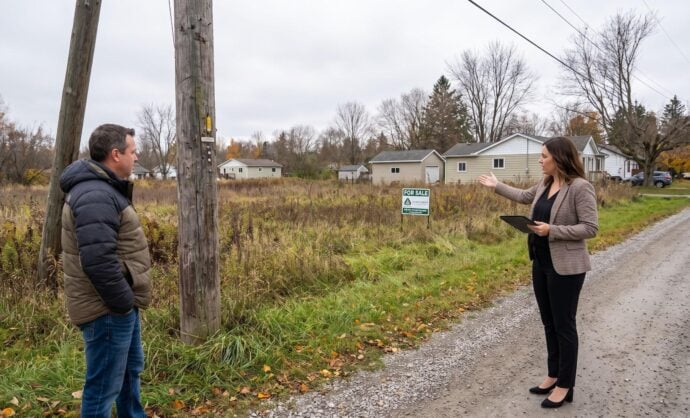
Yes, you can mortgage vacant land in Canada. However, lenders usually finance it through a vacant-land loan, lot loan or construction mortgage rather than a conventional residential mortgage.
The financing available depends on the type of land, its location, access to services, your intended use and how soon you plan to build. A serviced, build-ready lot is generally easier to finance than remote raw land with no development plan.
A conventional residential mortgage is normally designed for a property with a completed home that serves as collateral. Vacant land can still secure a loan, but lenders often use a specialized land-financing product because undeveloped property can be harder to value and resell.
Depending on the property and your plans, financing may take the form of a vacant-land loan, a lot loan, a construction mortgage, agricultural financing or a loan secured against another property you own.

Raw land has little or no infrastructure. It may lack legal road access, electricity, municipal water, sewer connections or an approved septic system. It is generally the hardest type of land to finance because the lender must consider whether the property can legally and economically be developed.
Unimproved land has some infrastructure nearby but still requires work before construction can begin. For example, electricity may be available along the road, while the buyer must still pay for the connection, drill a well or install a septic system.
Improved land normally has year-round road access and essential services available. It may already have residential zoning and an identified building site. Because it can be developed and resold more easily, it is usually the most lender-friendly type of vacant land.
A land loan finances the property without necessarily covering construction. It can suit buyers who want to hold the land before building, have not finalized their plans or are purchasing recreational property.
Not every bank finances vacant land. Local banks and credit unions may be more familiar with regional land values, zoning rules and development conditions.

A construction mortgage can cover the land purchase and the cost of building a home. Rather than advancing the entire construction budget at once, the lender normally releases money in stages as work is completed.
Before approval, the lender may require final building plans, permits, a construction contract, a detailed budget, a qualified builder and an appraisal based on the completed property. The lender may inspect the project before releasing each draw.
Some construction loans convert into a conventional mortgage after completion. Others must be refinanced into a separate mortgage.
Homeowners may be able to borrow against an existing property and use the funds to buy land. This can offer more flexibility because the lender is secured primarily by the existing home.
The risk is that the existing home becomes collateral. If the borrower cannot make the payments, the lender may take action against that property.
With seller financing, the landowner allows the buyer to pay the purchase price over time. The buyer and seller negotiate the down payment, interest rate, payment schedule, loan term and any final balloon payment.
This can help when conventional financing is unavailable, but the agreement should be prepared or reviewed by a lawyer. The buyer should still complete proper title, survey and property checks.
Private lenders may consider properties outside a bank or credit union’s lending criteria. They may focus more heavily on the property’s value and the borrower’s equity.
Private financing often includes higher interest rates, lender fees and shorter terms. Borrowers should have a clear plan to repay or refinance the loan before accepting it.
Land intended for farming may require agricultural rather than residential financing. The lender may consider the land’s productive value, farm income, water and soil conditions, existing infrastructure and the borrower’s experience.
There is no single down-payment requirement for every land purchase. The amount depends on the land type, appraised value, zoning, legal access, services, intended use, construction timeline and the lender’s maximum loan-to-value ratio.
A build-ready residential lot may qualify for a lower down payment than remote raw acreage. Highly specialized or undeveloped land may require a substantial cash contribution or may not qualify with a conventional lender.
Ask each lender what percentage of the lower of the purchase price or appraised value it is willing to finance. Also keep enough cash available for closing costs, investigations and early development expenses.
The lender will usually review your income, employment or business history, existing debts, credit history, savings and the source of your down payment.
A clear plan helps the lender understand how the land will be used and how its value may develop. Be prepared to explain what you intend to build or operate, when the project will start and how the next stage will be financed.
The lender must consider what would happen if it had to resell the land. Location, road access, lot size, topography, permitted uses, comparable sales and local demand can all affect the financing offered.
Decide whether you are buying the land to build a home, farm, operate a business, use it recreationally or hold it as an investment. This determines which financing products and lenders are appropriate.
Verify zoning, legal road access, building restrictions, utility availability, septic or well feasibility, easements and environmental conditions before making an unconditional purchase.
Include the down payment, legal fees, appraisal, survey, taxes, testing, utility installation, site preparation, permits, construction and a contingency for unexpected expenses.
A lender may request proof of income, bank statements, proof of down payment, the purchase agreement, a survey or site plan, zoning information, tax records, utility details and, where applicable, construction plans and contractor estimates.
Speak with banks, local credit unions, mortgage brokers, agricultural lenders and alternative lenders. Compare the total cost, repayment structure and conditions rather than focusing only on the interest rate.
Where possible, include conditions for financing, legal review, zoning confirmation, a satisfactory appraisal, survey review and any required soil, septic or environmental testing.
The lender may require an appraisal, survey, title search or additional reports before final approval. A lawyer then completes the purchase and registers the lender’s security against the land.

Confirm the current zoning directly with the municipality. Check whether your intended use is permitted and whether setbacks, minimum building sizes, conservation rules, floodplain restrictions or subdivision controls apply.
The property should have documented access from a public road or through a registered right of way. A path used informally across neighbouring land does not necessarily provide legal access.
Determine whether the property connects to municipal services. If it does not, investigate well availability, water quality, septic approval, soil conditions and installation costs.
Confirm the location of the nearest connection point and obtain estimates for bringing services to the building site. A utility line near the property does not guarantee an inexpensive connection.

A current survey can identify exact boundaries, encroachments, rights of way and utility easements. These may restrict where a house, driveway or other structure can be placed.
A lawyer should review the title for liens, restrictive covenants, leases and registered claims. Depending on the property, mineral, timber or water rights may also need investigation.
Check for contaminated soil, wetlands, flood risks, unstable slopes, drainage problems and former industrial or intensive agricultural use. These issues can affect financing, construction costs and future value.
In addition to the down payment, budget for possible appraisal fees, legal fees, survey costs, title insurance, environmental assessments, soil or septic testing, land-transfer taxes, permit fees, utility connections, road construction, clearing, grading and lender or broker fees.
Complete the highest-risk investigations early. Some costs must be paid before you know whether the land can be developed or financed as planned.
Land you already own may provide part of the equity required for construction financing. If the appraised land value is higher than the debt secured against it, the lender may recognize some of the difference as your contribution.
The amount accepted depends on the lender’s appraisal, existing liens, the construction budget, the estimated completed value and the lender’s loan-to-value limits
Speak with a Multi-Prêts mortgage broker in Montreal for a free mortgage assessment.