Financing heritage renovation in Montreal bef
thumbnailPlanned URL: https://hypothequerapide.com/en/n...
August 28, 2026


thumbnail
Planned URL: https://hypothequerapide.com/en/notre-blogue/2026/08/30/pyrite-montreal-mortgage-approval
Properties built between 1970 and 1998 in Greater Montreal often hide a chemical time bomb in their foundations. The presence of pyrite in backfill can trigger structural heaving that instantly jeopardizes your investment and complicates buying a Montreal home with pyrite.
Lenders frequently view these properties as high-risk collateral, potentially blocking your financing unless specific criteria are met. We will examine how this mineral affects mortgage approval and what steps you must take to secure your purchase.
Pyrite oxidation causes structural heaving in Greater Montreal homes built between 1970 and 1998. Lenders require a Swelling Potential Petrographic Index (SPPI) below 10 for standard financing, as high levels trigger costly foundation excavation.
The technical reality of SPPI levels leads directly to how banks perceive these specific structural risks.
Banks view pyrite as a direct threat to their collateral. If the foundation fails, the property value drops instantly. This makes the loan high-risk for the institution.
A house with a confirmed pyrite problem can lose up to 15% of its market value overnight, creating a significant equity gap for any traditional mortgage lender.
Mortgage insurers like CMHC often refuse files with active structural swelling issues. Their criteria are strict.
Without a clean test, securing a low interest rate becomes nearly impossible. Risk premiums apply.
Moisture hits the iron disulfide in the backfill, triggering a chemical reaction. The result is sulfuric acid eating through the concrete slab from the bottom up.
Chemical Process
Pyrite reaction: Moisture + Oxygen + Iron Disulfide = Sulfuric acid and Gypsum crystals. This expansion causes structural heaving.
Gypsum crystals then form, expanding and exerting massive upward pressure. The floor starts to buckle visibly.
Concrete eventually disintegrates, becoming brittle and powdery. Structural integrity is compromised, making the basement floor completely unstable for daily use.
This process is slow but relentless. It cannot be stopped without removing the source material.
While the chemistry is invisible, the physical damage eventually surfaces, demanding a keen eye during your first walkthrough.
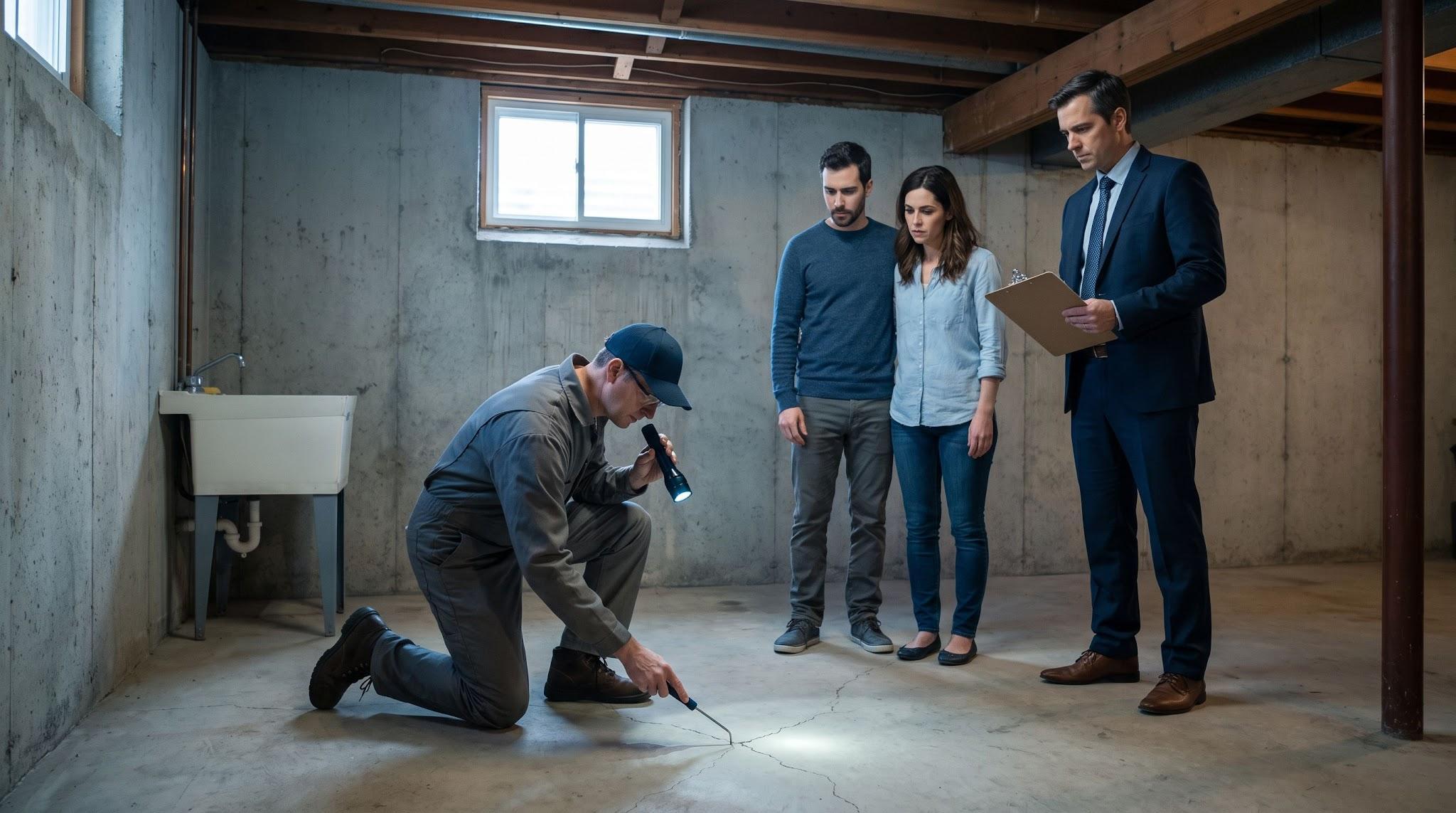
Look for star-shaped cracks on the basement floor. These are classic indicators of upward pressure. Standard settling cracks usually run in straight lines, unlike these jagged patterns.
White dust is actually sulfation residue. It indicates an active chemical reaction.
A fresh coat of paint often hides these crucial warning signs. Be wary of recent renovations.
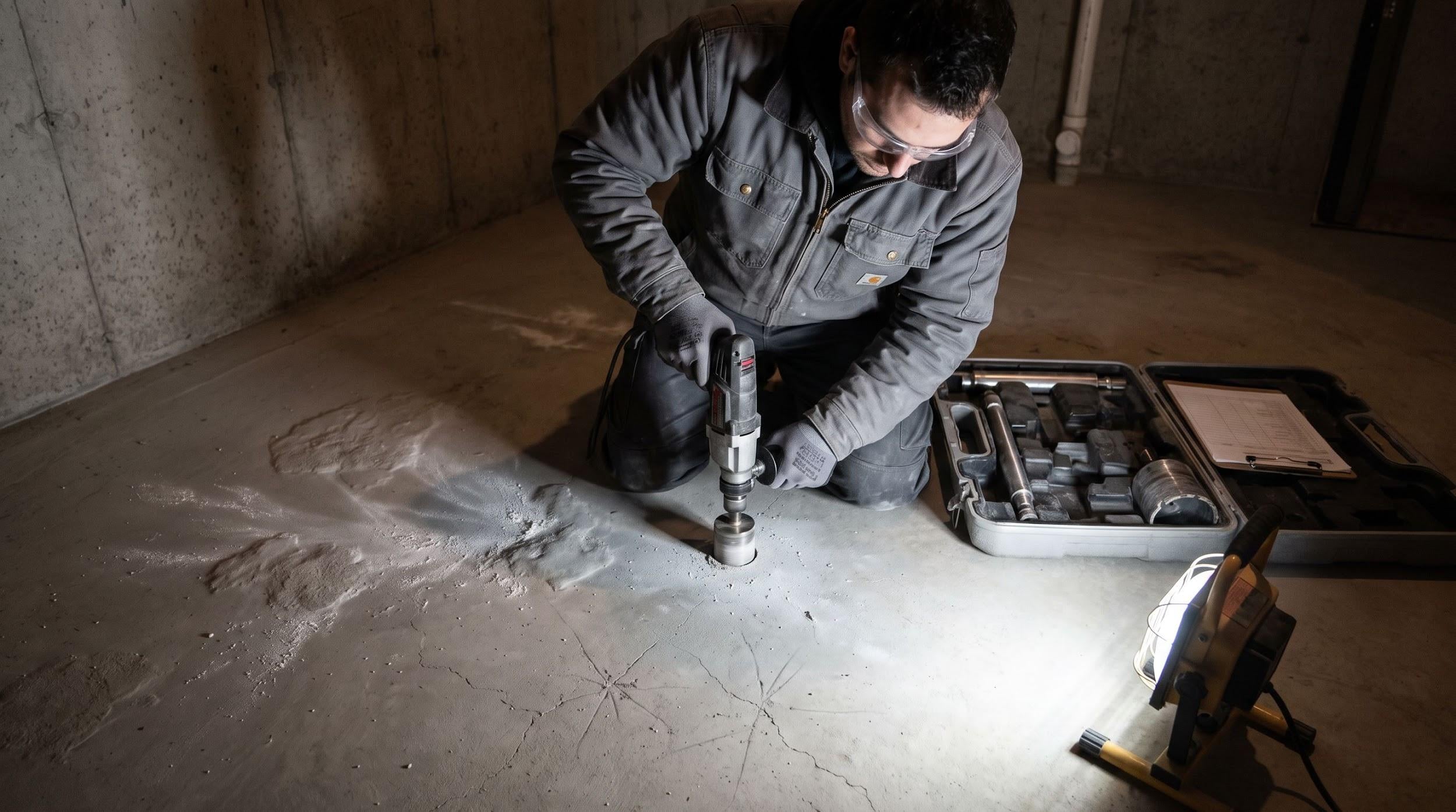
The SPPI is the only way to confirm the risk level. A laboratory must drill a core sample from the garage or basement. They analyze the rock composition under a microscope.
SPPI Scale and Mortgage Impact
SPPI Scale: 0-10 (Negligible), 10-20 (Low), 20-40 (Moderate), 40-60 (High), 60-100 (Very High). Lenders typically require a score below 10 for standard financing when Buying a Montreal Home With Pyrite: Can It Affect Mortgage Approval?
A score below 10 is considered negligible. Anything above 20 suggests a high swelling potential.
A floor can look perfect but have a high SPPI. Conversely, a cracked floor might have a low index if the reaction is finished.
"Never rely on a visual inspection alone; the petrographic analysis is your only legal shield against future structural surprises."
Knowing what to look for is vital, but knowing where the problematic backfill was distributed can save you weeks of wasted visits.
High-risk zones include the South Shore (Longueuil, Boucherville, Brossard) and Montreal's East End (Rivière-des-Prairies). These areas used backfill from specific quarries active during the 1980s construction boom. Properties built between 1970 and 1998 are most vulnerable.
|
Region |
High-Risk Cities |
Construction Era |
Risk Level |
|
South Shore |
Longueuil, Brossard, Boucherville |
1970, 1998 |
★★★★★ |
|
North Shore |
Laval, Blainville, Terrebonne |
1970, 1990 |
★★★★☆ |
|
Montreal Island |
RDP, Anjou, Saint-Léonard |
1980s |
★★★★☆ |
|
West Island |
Pierrefonds, Dollard-des-Ormeaux |
1970, 1990 |
★★★☆☆ |
Even newer homes can be affected if recycled materials were used. Always verify the source.
Advise checking the municipal evaluation for mentions of previous soil tests. It is a quick win.
Sellers must disclose any known pyrite history in the Declarations by the Seller. Failure to do so constitutes a hidden defect (vice caché). This can lead to massive lawsuits later.
Real estate brokers have a duty to verify. If a house is in a known zone, they must recommend a test. They protect both parties.
Quebec Civil Code protections allow buyers to sue for price reduction if pyrite is discovered post-sale. But proving the seller knew is often a long and expensive legal battle. Better to test before Buying a Montreal Home With Pyrite: Can It Affect Mortgage Approval? becomes your nightmare.
In Quebec real estate, silence regarding a known pyrite test is considered fraud, potentially nullifying the entire transaction.
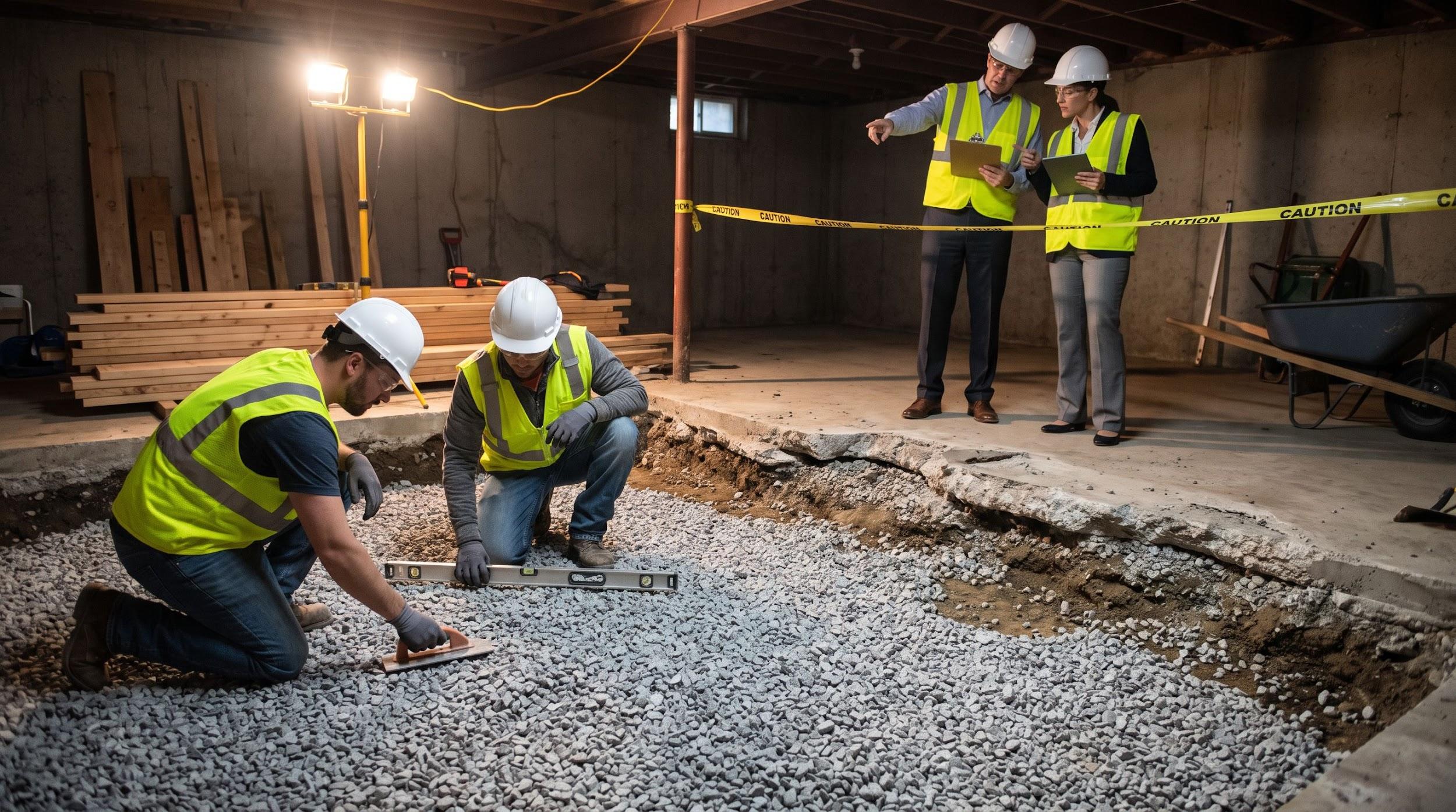
If the test comes back positive, you don't necessarily have to walk away, provided you understand the heavy lifting required to fix it.
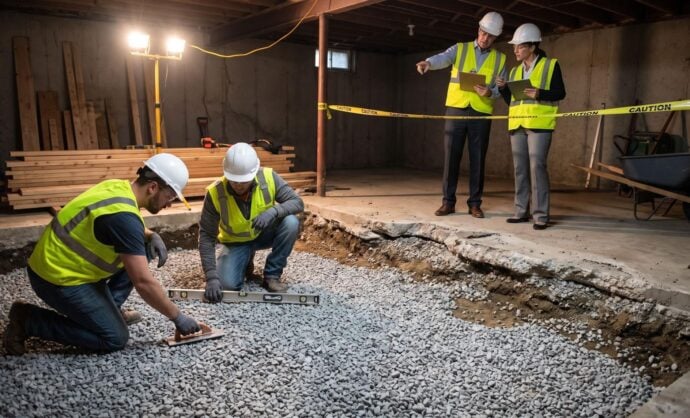
The only real fix is total excavation. Workers must break the concrete slab. They then remove every inch of the contaminated backfill. This is a messy and intrusive process.
Replace the old stone with certified DB backfill. This non-swelling material is guaranteed safe. A new slab is then poured over it.
Expert Insight
Total excavation of contaminated backfill and replacement with certified DB stone is the only permanent fix. Estimated cost: $15,000 to $40,000.
A remediated home often sells better than one with a "negligible" score. It offers total peace of mind to the next buyer and their bank. It effectively kills the risk forever.
Costs typically range from $15,000 to $40,000 depending on the surface area. Garage repairs usually add another $6,000 to $8,000 to the bill.
Use the repair estimate to negotiate the purchase price. Most sellers will drop their asking price to cover the work. This keeps the mortgage amount realistic for the bank.
Financial Resources
Check if the property is still covered by the Guarantee Plan for New Residential Buildings. Some older claims might still be valid. Always consult a specialized lawyer to verify your eligibility for these funds.
Remember that banks might hold back funds in escrow until the work is completed. Buying a Montreal Home With Pyrite: Can It Affect Mortgage Approval? Yes, but a solid price adjustment protects your equity.
Securing a mortgage for a Montreal property requires a low SPPI score to mitigate structural risks. By prioritizing professional testing and negotiating remediation costs, you protect your investment and ensure long-term equity. Act now to transform a potential foundation challenge into a secure, high-value home for your future.
Lenders view pyrite as a significant threat to their collateral because the resulting structural damage can cause property values to drop by up to 15% almost instantly. Most financial institutions and mortgage insurers, such as the CMHC, are hesitant to approve financing for affected homes without a clear petrographic test, as the cost of foundation excavation creates a major equity gap.
To secure a mortgage, you will likely need to provide a Swelling Potential Petrographic Index (SPPI) report. If the score is high, banks may refuse the loan entirely or require that funds be held in escrow until the contaminated backfill is replaced with certified DB material.
You should look for star-shaped or jagged cracks on the basement or garage floor, which indicate upward pressure from the swelling backfill. Other common indicators include doors that no longer close properly, visible humps in the concrete slab, and a white, powdery substance known as efflorescence appearing near floor cracks.
Be cautious of fresh paint or new flooring in older basements, as these can often hide active sulfation residue. While these signs suggest a problem, a visual inspection alone is insufficient to confirm the risk level; only a laboratory core sample can provide a definitive diagnosis.
The risk is most prevalent in the South Shore (Longueuil, Boucherville, Brossard), Montreal’s East End (Rivière-des-Prairies, Pointe-aux-Trembles), and parts of the West Island. Properties built between 1970 and 1998 are the most vulnerable, as they often utilized backfill from specific quarries active during that era's construction boom.
Even if a home is outside these primary zones, any property built with recycled or uncertified materials during the 1980s could be affected. It is highly recommended to check the municipal evaluation and the Declarations by the Seller for any mentions of previous soil tests or foundation repairs.
The SPPI is a scale from 0 to 100 that quantifies the risk of future foundation swelling. A score between 0 and 10 is considered negligible and is generally acceptable for mortgage lenders, while any result above 20 indicates a high swelling potential that could lead to serious structural compromise over time.
This index is determined by a laboratory analysis of a core sample, where experts examine the rock composition and clay content under a microscope. Because a floor can look perfect but still have a high SPPI, this test serves as your primary legal and financial shield during a real estate transaction.
Permanent remediation involves breaking the concrete slab, excavating the contaminated backfill, and replacing it with certified non-swelling DB stone, which typically costs between $15,000 and $40,000. In most cases, buyers use these repair estimates to negotiate a lower purchase price, effectively having the seller cover the cost of the work.
While the seller usually pays for the initial test (approximately $350 to $550), the buyer must ensure the sales contract is conditional upon a satisfactory report. While there are no specific provincial grants for pyrite, some homeowners may leverage energy efficiency programs or municipal tax credits when performing these major structural renovations.
thumbnailPlanned URL: https://hypothequerapide.com/en/n...
thumbnailPlanned URL: https://hypothequerapide.com/en/n...