How to Prepare and Succeed in Your Mortgage A
Embarking on a real estate project inevitably involves ...
September 29, 2025


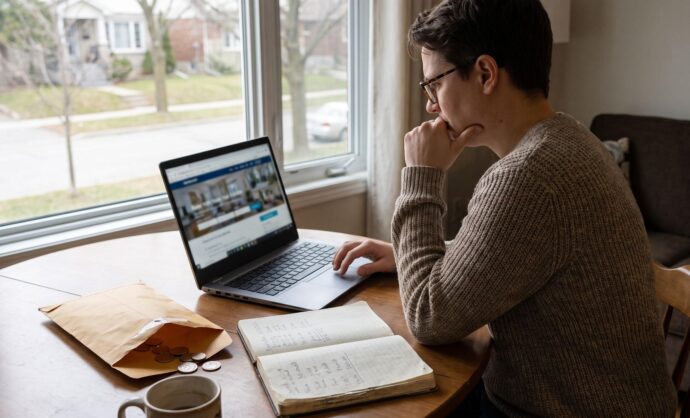
Zero-Down Mortgage Canada: Can You Buy a Home Without a Down Payment?
A traditional mortgage in Canada normally cannot finance 100% of a home’s purchase price. Buyers must still provide the minimum down payment required by Canadian mortgage rules.
However, a buyer may be able to purchase a home without using their own cash savings for the down payment. This is usually done by borrowing the required down payment, receiving it as a non-repayable family gift, or combining programs such as the First Home Savings Account and the Home Buyers’ Plan.
This is often called a zero-down mortgage strategy, but it is not truly a mortgage with no down payment. The lender still receives the required down payment and must approve its source. You also need enough cash for closing costs and must qualify for every debt involved.

Most Canadian lenders do not offer a standard mortgage covering the entire purchase price. Instead, an effective zero-down strategy uses another approved source to fund the minimum down payment.
• An unsecured personal loan
• An unsecured line of credit
• A non-repayable gift from an eligible family member
• Money already saved in a First Home Savings Account
• An eligible RRSP withdrawal under the Home Buyers’ Plan
• A provincial or municipal homebuyer assistance program
• Gifted equity when buying a property from a family member
• A rent-to-own arrangement that builds purchase credits over time
Not every lender accepts every source. The lender and mortgage insurer must be told where the money came from, and any required loan payment will be included in your affordability calculation.
Zero down also does not mean zero cash. Legal fees, land transfer tax, inspections, insurance, adjustments and other closing expenses usually need to be paid separately.
The minimum down payment depends on the purchase price of the home.
The minimum down payment is 5% of the purchase price.
For example, a $400,000 home requires at least $20,000 down.
The minimum is:
• 5% of the first $500,000
• 10% of the portion above $500,000
For example, the minimum down payment on a $750,000 home is $50,000:
• $25,000 on the first $500,000
• $25,000 on the remaining $250,000
The minimum down payment is 20% of the purchase price. A $1.5 million home therefore requires at least $300,000 down.
A borrowed-down-payment purchase normally follows four steps:
1. You obtain the minimum down payment through an approved personal loan or unsecured line of credit.
2. The mortgage lender verifies the source, balance, interest rate and required monthly payment.
3. The lender includes that payment with your other debts when calculating affordability.
4. If you still qualify, the lender advances the mortgage for the remaining purchase price and the down payment is applied at closing.
The down-payment loan and the mortgage are separate debts. Being able to borrow the down payment does not mean you will qualify for the same mortgage amount as a buyer who saved it.
An unsecured personal loan can provide a fixed amount with a defined payment schedule. This makes the obligation easy for the mortgage lender to verify.
The disadvantage is that unsecured loans often have considerably higher interest rates than mortgages. The monthly payment may also be large because the repayment term is much shorter.
A line of credit may provide more flexibility than a personal loan, but its rate can be variable. If the rate rises, the required payment and overall cost may increase.
The lender will still include an assumed or actual monthly payment in your debt-service calculation. You must disclose the line of credit even when the balance is new or the first statement has not arrived.

A family gift is often the cleanest way to complete a purchase without using your own down-payment savings because it does not create another monthly debt.
The lender will normally require a signed gift letter confirming that the money does not need to be repaid. The lender may also request proof that the funds were transferred to your account.
A loan presented as a gift is not acceptable. If repayment is expected, it must be disclosed as debt.
The FHSA allows an eligible first-time homebuyer to save for a qualifying first home. Contributions are generally tax-deductible, and a qualifying withdrawal can be made tax-free.
The first-year participation room is $8,000, and the standard lifetime contribution and transfer limit is $40,000. Unused room may be carried forward within the program’s rules.
An FHSA is not a true zero-down method because it uses money you previously contributed. However, it can substantially reduce the amount that must come from an ordinary savings account.
The Home Buyers’ Plan currently allows an eligible buyer to withdraw up to $60,000 from an RRSP to buy or build a qualifying home.
HBP withdrawals generally need to be repaid to the RRSP over 15 years. A required repayment that is not made is normally included in taxable income for that year.
Eligible buyers may use the HBP and make a qualifying FHSA withdrawal for the same home, provided they meet the conditions for both programs.
Some provinces and municipalities offer loans, grants, forgivable loans, tax rebates or shared-equity assistance. Eligibility can depend on income, purchase price, location, residency and first-time-buyer status.
These programs change regularly. Confirm that a program is currently accepting applications and ask the mortgage lender whether the assistance is compatible with the planned mortgage.
When purchasing a property from a close family member for less than its appraised market value, some lenders may allow the difference to count as gifted equity.
For example, if a parent sells a home worth $500,000 to an adult child for $450,000, the $50,000 difference may potentially form part of the down payment. The lender will require an appraisal and legal documentation, and its own rules will apply.
A rent-to-own agreement allows part of the tenant’s payment to build credits toward a future purchase. It may help a buyer who needs time to save or repair credit.
It is not an immediate zero-down mortgage. Buyers commonly pay an option deposit and higher monthly rent. If they cannot complete the purchase by the deadline, they may lose the option payment and accumulated credits.
The contract should be reviewed by an independent real-estate lawyer before signing.

The borrower must normally show enough reliable income to support the mortgage, the down-payment loan and all existing debts. Salaried income is generally easier to document, while self-employed or variable income may require a longer history.
There is no universal credit-score cutoff for every zero-down strategy. Requirements vary by lender, insurer and the rest of the application.
Borrowed down payments increase risk, so lenders generally expect strong payment history, manageable credit utilization and no recent signs of financial distress.
Gross Debt Service measures housing costs against gross household income. Total Debt Service adds other required debt payments.
A borrowed down-payment payment is included in TDS. This is one of the main reasons a buyer with no saved down payment may qualify for a smaller mortgage.
Borrowers generally need to qualify at a rate higher than the contract rate under the applicable mortgage qualifying rules. This checks whether the household could continue carrying the mortgage if rates rise.
The stress test applies to the mortgage, while the down-payment loan still appears as an additional monthly debt. A purchase that looks affordable at the advertised mortgage rate may fail when both requirements are applied.
Borrowed-down-payment products are generally intended for an owner-occupied home rather than a rental property. Property type, location, condition and purchase price must meet the lender’s and insurer’s criteria.
Expect to provide bank statements, loan documents, gift letters and transaction records. Lenders often review activity for the period leading up to closing and may ask about large deposits.
A zero-down strategy usually does not cover all upfront expenses. Depending on the province, municipality and property, buyers may need cash for:
• Legal fees and disbursements
• Land transfer tax
• Provincial sales tax on mortgage insurance premiums where applicable
• Home inspection
• Appraisal
• Title insurance
• Property-tax and utility adjustments
• Home insurance
• Moving expenses
• Immediate repairs, furnishings and utility deposits
Closing costs are often estimated at roughly 1.5% to 4% of the purchase price, but the actual amount varies significantly. Land transfer tax alone can make the total much higher in some cities and provinces.
The lender may also want proof that you have enough funds to close. Borrowing every dollar and having no reserve can weaken the application even when it is technically possible.

You have a mortgage payment and a separate personal-loan or line-of-credit payment. The second debt may carry a much higher interest rate.
The down-payment loan can reduce the maximum mortgage you qualify for. Borrowing $25,000 does not automatically increase your buying power by $25,000.
After accounting for mortgage insurance and transaction costs, you may begin with little or no effective equity. A small decline in the property’s value can leave you owing more than the home could sell for after selling costs.
You pay interest on the mortgage, potentially on the financed insurance premium and on the separate down-payment debt.
Homeownership brings repairs, maintenance, tax increases and unexpected expenses. A buyer who uses all available credit to close may have no financial buffer.
Real-estate commissions, legal expenses and mortgage penalties can make an early sale expensive. A zero-down buyer may need to bring money to the sale if the property has not appreciated enough.
When the down payment comes from a variable-rate line of credit, the payment and cost can rise even if the mortgage itself has a fixed rate.
A zero-down mortgage strategy can help a buyer enter the market sooner, but approval alone does not make it affordable.
The best candidates usually have strong income, low existing debt, money for closing costs and emergencies, and a clear plan to repay the borrowed down payment quickly. Buyers who are already financially stretched are generally safer waiting, reducing debt or saving part of the down payment.
Compare the full cost of the mortgage, mortgage insurance, down-payment loan and closing expenses before making a decision. A licensed mortgage professional can confirm which sources are currently accepted and calculate how the additional debt affects your qualification
Speak with a Multi-Prêts mortgage broker in Montreal for a free mortgage assessment.
Embarking on a real estate project inevitably involves ...
Canada has several tools to regulate its domestic marke...